
Rethinking Lighting Through 3D Printing
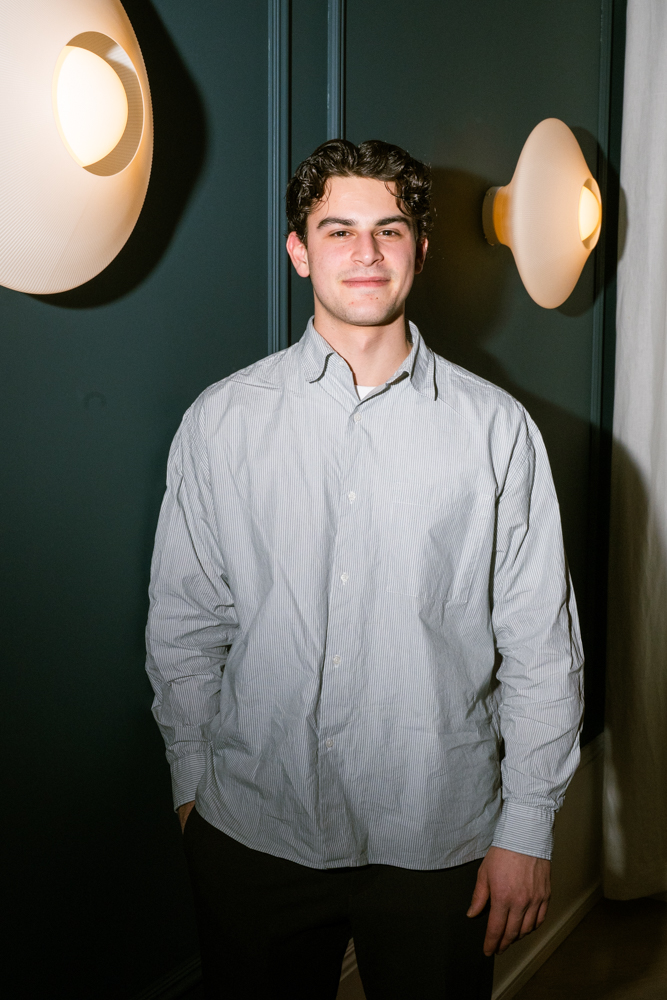
- Photo by Lianne Snow DP
Giraffe founder Harrison Angellotti brings an engineering mindset to architectural lighting, using additive manufacturing to develop new formal and material possibilities
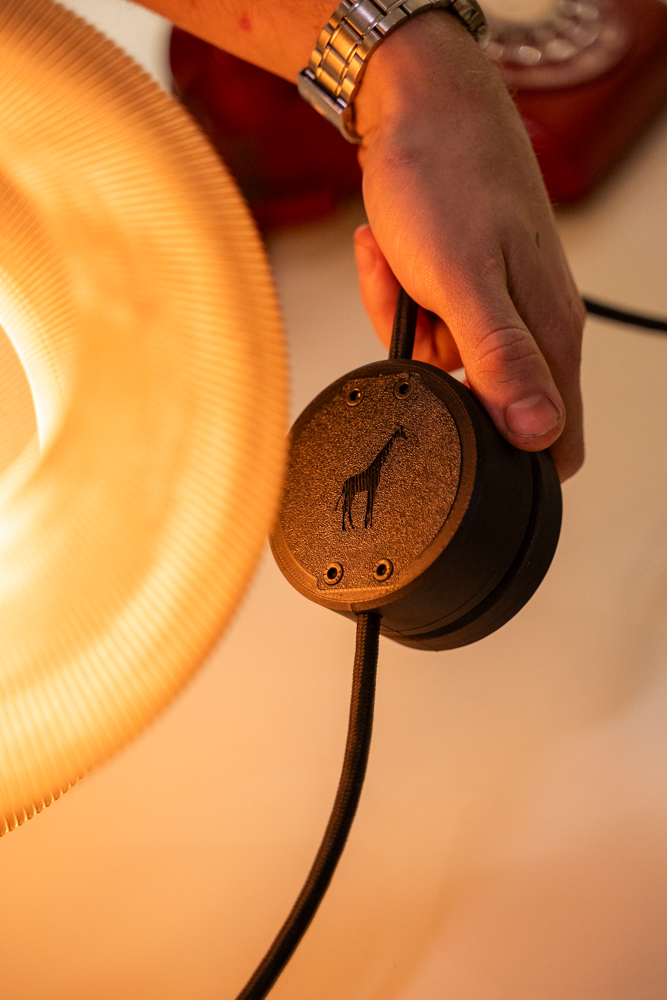
For Harrison Angellotti, lighting design begins long before form takes shape. It starts with process. Supported by a B.Sc. in Computer Science, a B.Eng. in Mechatronic Systems Engineering, and 10 years experience with 3D printing technology, Angellotti recently founded his Toronto-based lighting studio, Giraffe Lighting. Giraffe applies a method grounded in digital fabrication, where 3D printed lighting evolves from constraint, material, and geometry rather than surface aesthetics alone.
This approach sets Giraffe apart in a crowded field of decorative fixtures. Instead of treating additive manufacturing as a tool, Angellotti uses it as a design language. Each piece emerges from the logic of its making, shaped by layer-based construction, material flow, and the inherent behaviour of the machine. The result is a collection of lighting fixtures that feel tactile and precise, balancing consistency with subtle variation.
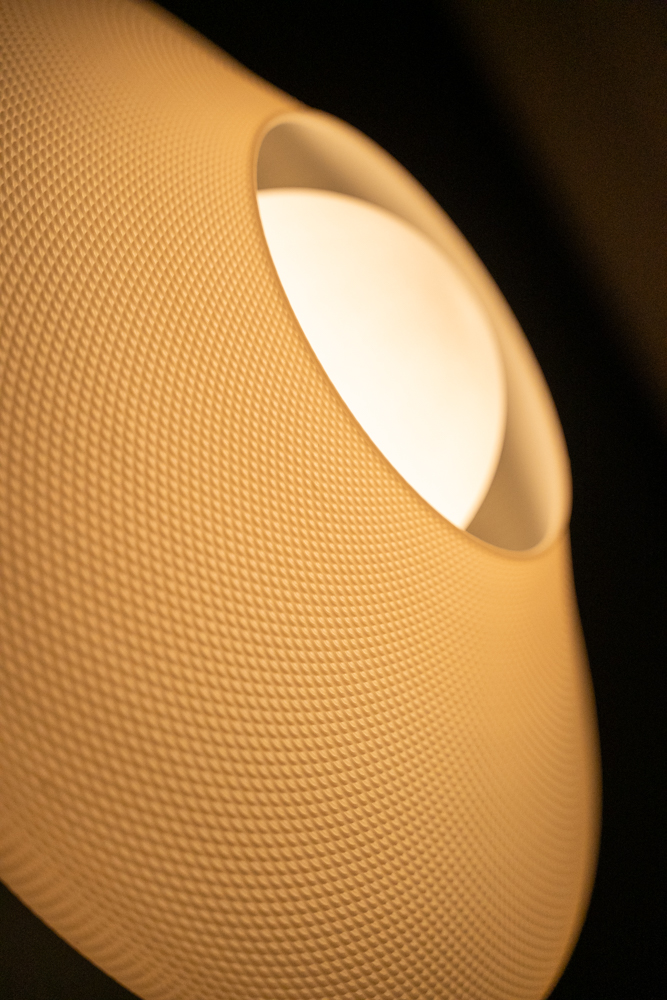
At the same time, this method supports a more accessible model of custom lighting design. Digital workflows allow for efficient iteration without the need for costly retooling, making it possible to adapt fixtures to specific architectural contexts while maintaining production efficiency. For specifiers and designers, this flexibility opens new possibilities within the lighting design process, particularly in projects that demand both customization and scalability. From single fixtures to entire architectural lighting systems, Giraffe can repeat and combine singular components to create larger installations. And, printed using recycled plastic that diffuses light just as Japanese paper lanterns do, Giraffe can also manufacture in any Pantone colour a client can dream of.
For TPL Lighting, this alignment is key. TPL’s commitment to Canadian design, innovation, and service reflects a shared belief that architectural lighting should be both thoughtful and attainable.
3D printed lighting as generative system
In Giraffe’s work, 3D printing operates as a set of generative rules. Because objects are built layer by layer, geometry becomes structural. Mesh-like surfaces and woven patterns arise naturally from the process, creating fixtures that diffuse light with a soft, atmospheric quality.
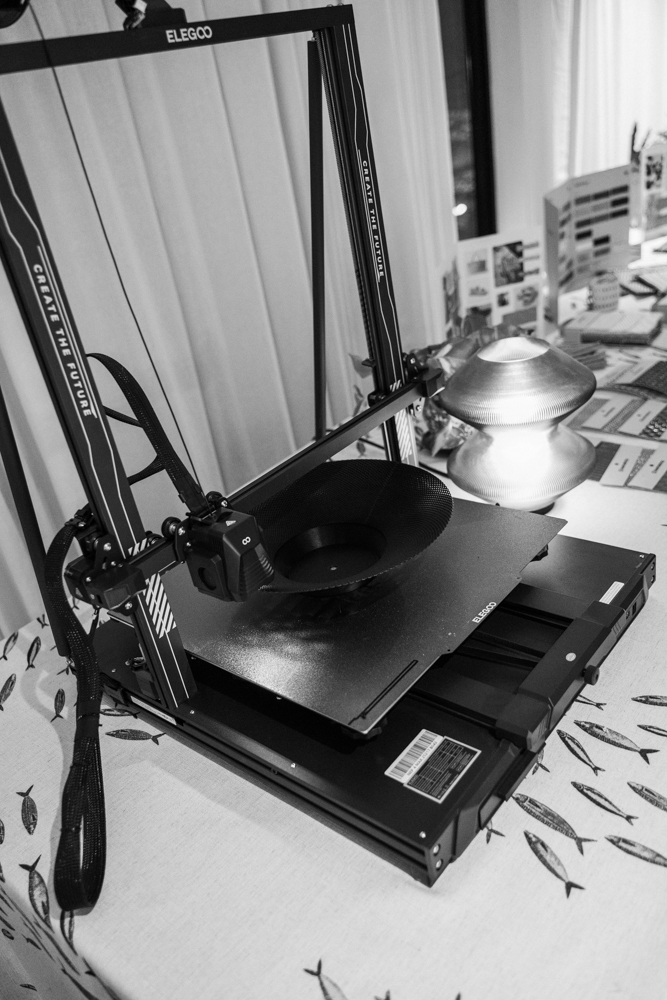
Angellotti has developed custom filaments, including proprietary light-diffusing blends of white plastic that enhance this effect. These materials allow each fixture to glow with warmth while maintaining the precision of digital fabrication lighting. The outcome is both technical and expressive, bridging engineering and design in a way that feels immediate and considered.
This system extends beyond individual products. Collections such as Giraffe’s Ripple demonstrate how smaller units combine into more complex compositions, supporting a flexible approach to specification across residential and commercial projects.
To better understand how process shapes outcome, we spoke with Angellotti about his approach to design, material, and making.
TPL: What led you to start Giraffe so early in your career?
Harrison: I was fortunate to have support early on, which gave me the freedom to take a risk. I wanted to build something of my own, and starting early allowed me to experiment and learn quickly while the stakes were still manageable.
TPL: How does 3D printing shape your design approach?
Harrison: It gives me a high level of control over the entire process. I had already spent years working with 3D printing, so it felt natural to build a practice around it. It lets me design with the process in mind rather than applying it afterward.
TPL: What gap did you see in the lighting design space?
Harrison: I noticed that a lot of well-crafted lighting can be difficult to access. My goal was to create pieces that feel considered and tactile, while still being scalable and attainable.
TPL: Your work feels both precise and handcrafted. How do you achieve that balance?
Harrison: Every machine behaves slightly differently, and I treat that variability as part of the design. I have also developed custom materials that diffuse light in a softer way, so even though the pieces are digitally fabricated, they retain a sense of warmth and texture.
TPL: How does your engineering background influence your work?
Harrison: It shapes how I approach problem-solving. I think carefully about how things function and feel. Even small details, like the resistance in a dimmer, come from applying basic mechanical principles to improve the user experience.
TPL: What role does lighting play in shaping atmosphere?
Harrison: Colour temperature makes a significant difference. I tend to work with warmer light, around 2700K, because it feels more comfortable. I also use dim-to-warm technology, so the light becomes warmer as it dims, which creates a more natural transition in a space.
TPL: How did your relationship with TPL come about?
Harrison: It developed through conversations. What stood out was TPL’s interest in the ideas behind the work, not just the product itself. That made it feel like a strong fit.
TPL: What excites you about working in Toronto right now?
Harrison: There is a growing openness to experimentation. Designers are interested in how things are made, not just how they look, and that creates space for new approaches to emerge.
TPL: Any advice for emerging designers?
Harrison: Stay curious and talk to as many people as you can. Those conversations will shape how you think. Being adaptable is just as important as having a clear point of view.
A shared platform for innovation
Giraffe reflects a broader shift in architectural lighting toward systems that integrate design, material, and production. By embedding parametric thinking into the lighting design process, Angellotti creates work that adapts to context while maintaining a clear formal identity.
For TPL, representing Giraffe is a natural extension of its commitment to forward-thinking design. Together, they highlight a new generation of Canadian makers who are redefining what custom lighting design can be, where innovation is grounded in both technology and experience. As digital fabrication continues to shape the industry, practices like Giraffe point to a future where lighting is not only specified but actively designed through the systems that produce it.
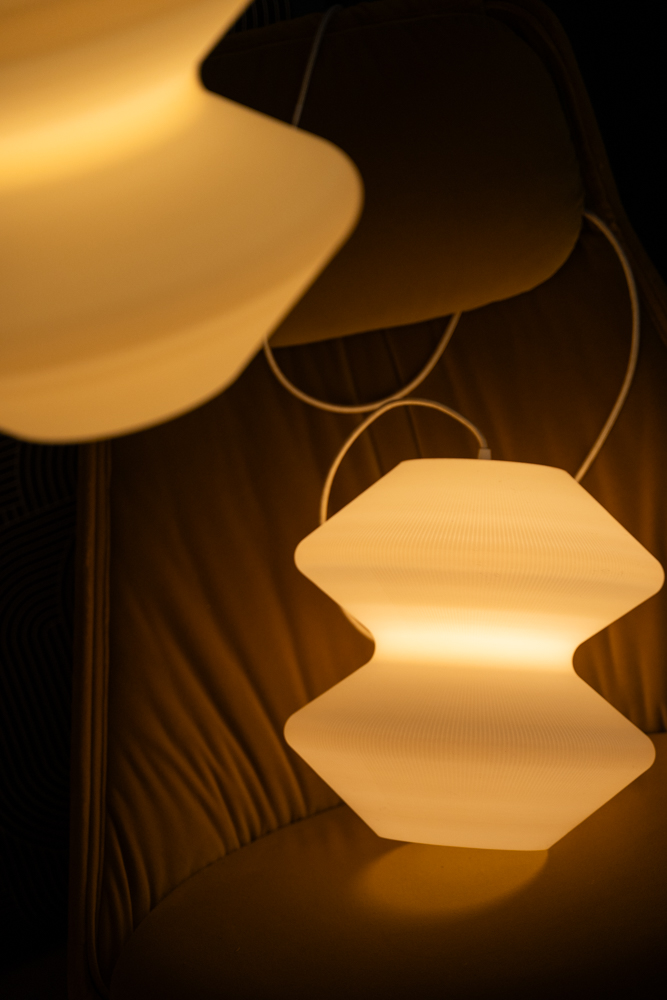
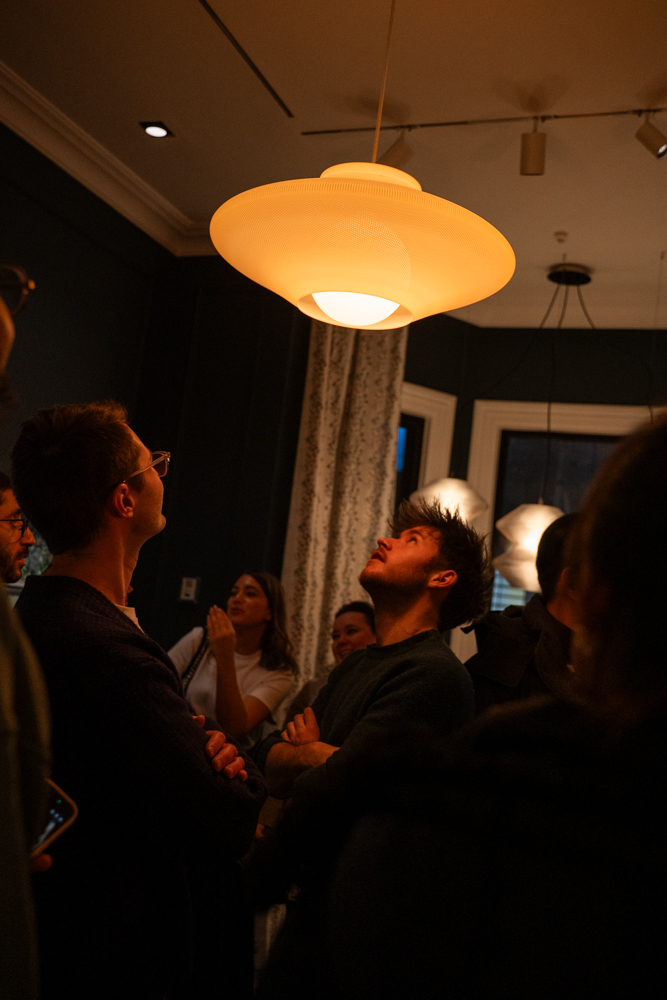
Experience Giraffe’s form, material, and making for yourself at The Adelaide Project by TPL. On January 30 and 31, during the DesignTO festival, Giraffe founder Harrison Angellotti will be on hand at our downtown experiential space to demonstrate how his machines work, the materials he prints with, and examples from the Giraffe’s growing product collection.
RSVP today.